Best Movie Scores - why they make or break a movie
By Joanna Cowan
Movie scores are crucial to movies, they work beneath conscious awareness, steering your emotional responses in the direction the director intends, building the tension and revealing to you a character's true motive.
When I was younger I used to predict what was going to happen next in a movie just by the shift in music.
So here is a playlist made of my top ranked movie scores: note that this is focusing not on any jukebox scores but scores written for the movie….


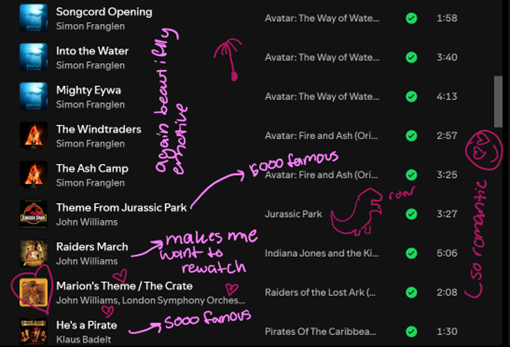

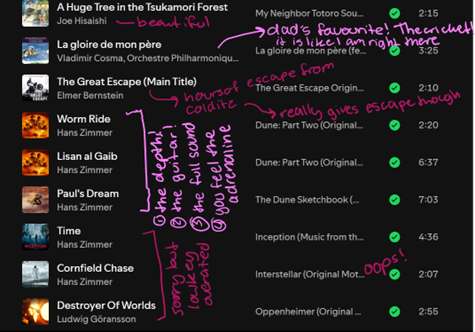


But what makes movie scores so crucial to a movie? David Winter puts it that there is a “profound symbiosis between soundtracks and storytelling”. Scores are embedded into every part of the movie, manipulating our emotions.
Before diving into examples, it’s worth understanding why scores hold such power. Soundtracks are often internalised even if you don’t remember the exact scene in the movie. Often when you hear a soundtrack it causes you to think specifically of a film, you associate that soundtrack with the way you feel about the film. Sometimes you get exhilarated by the sound of the Lord of the Rings soundtrack, or feel nostalgia from the Back to the future soundtrack or a melancholy feeling from the ‘Pride and Prejudice’ film version when listening to ‘dawn’. This is all because of a score's ability to “transform a scene from mundane to memorable”.
Jaws' iconic two note motif is crucial in building suspense before vicious attacks. Even without watching the film, listening to the soundtrack evokes deep fear as we anticipate some sort of negative event. The score, whilst minimalistic, has become well-renowned for its ability to provoke a twist in your stomach every time you hear it. Similarly, The Psycho soundtrack by Bernard Herrmann, uses ominous repetitive sounds to evoke terror. Since then, it has been made an iconic meme which we immediately associate with horror.
Star wars, the brassy, loud fanfare immediately establishes that this will be a story of adventure and emotion. The theme evokes the enormity of the universe in which the narrative unfolds. Each individual character's theme affects how we perceive them with Leia’s being one of beauty, strength, resilience and love but Darth Vader and the Siths’ one of ominous regiment inflicting a fearful feeling whenever you hear the sound as we begin to anticipate destruction.
A score tells you what to feel with the Godfather immediately eliciting a sense of family, tradition and melancholy through its solemn Italian folk inspired melody. Hans Zimmer's Inception uses music to “mirror the film's manipulation of time and reality”, continuing the motif to condition the audience into associating it with destruction. It consolidates the narrative with repeating melodies prompting the audience to remember the past.
There is a profound discomfort, often intentional, felt when a film uses silence. Usually an eerie moment where you can suddenly hear your own breath, building the tension in the scene whether it is a horror film or romance. Silence leaves room for the audience and characters to reach an anagnorisis, removing musical guidance and forcing the audience to confront the raw emotion we experience in our ‘soundtrackless’ lives.
There was a trend online that explored how adding a different soundtrack changes the meaning of the scene completely. This is because music is not just a silence filler but tells the narrative by making us feel what the character is meant to feel at any given moment.
Therefore, next time when watching a movie please consider whether your reactions are truly your own or are the composers manipulating you from afar through their intricate scores.
Comment at the bottom more movie scores you would like to add!
Bibliography:


