The Final Whistle: Every Player and (One Coach) Who Retired After the 2026 FIFA World Cup
By Tanaz Tahery
The 2026 FIFA World Cup marked the end of a golden era in world football. As the tournament concluded across North America, several legendary players — and even a head coach — officially announced their retirement from international duty. Their decisions were confirmed through credible outlets such as FIFA, Reuters, The Guardian, ESPN, RTBF Belgium, Caracol TV, CAF Online, and Japan Times. This article documents every confirmed retirement, while also acknowledging Lionel Messi’s widely interpreted final World Cup, even though he did not make an official announcement.
Portugal: Cristiano Ronaldo

Ronaldo confirmed that the 2026 World Cup was his final international tournament (The Guardian). His 20‑year career included the Euro 2016 title, five Ballon d’Or awards, and over 200 caps, making him one of the most influential players in football history.
Croatia: Luka Modrić

Modrić retired immediately after Croatia’s elimination (Reuters). As Croatia’s most capped player and a Ballon d’Or winner, he led his nation to a World Cup final in 2018 and a semi‑final in 2022, redefining midfield excellence.
Uruguay: Luis Suárez

Suárez announced his retirement through the Uruguayan Football Association (ESPN). Uruguay’s all‑time top scorer leaves behind a legacy of passion, creativity, and unforgettable World Cup moments.
Spain: Sergio Busquets

Busquets retired after Spain’s Round‑of‑16 exit (Marca, AS). A World Cup (2010) and Euro (2012) champion, he anchored Spain’s midfield for over a decade with unmatched tactical intelligence.
Belgium: Jan Vertonghen
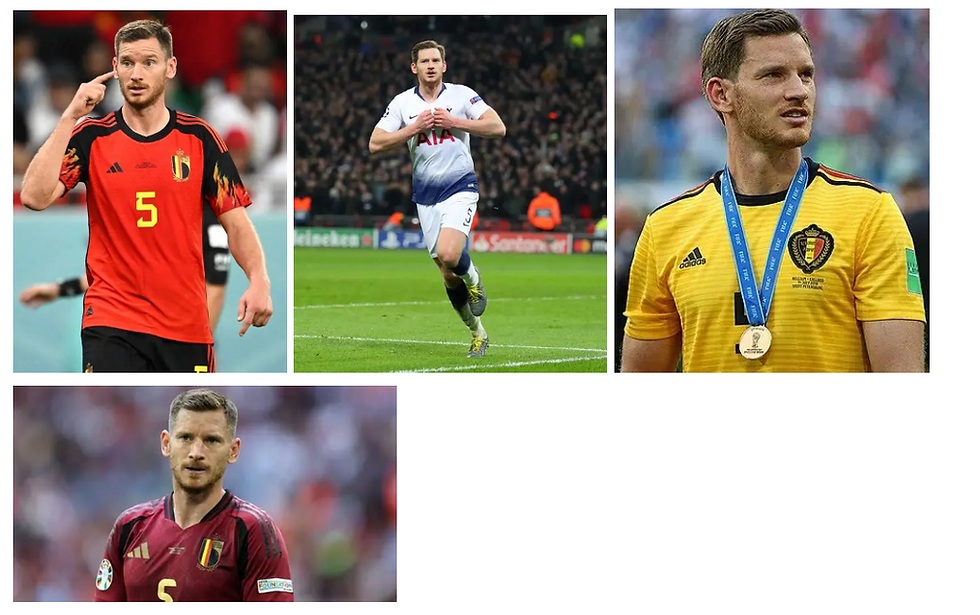
Belgium’s most capped player ended his international career after the group stage (RTBF Belgium). His defensive leadership defined Belgium’s “Golden Generation.”
Germany: Manuel Neuer

Neuer confirmed the 2026 World Cup was his final international tournament (Punch Newspapers, TVC News). Widely considered one of the greatest goalkeepers ever, he revolutionised the sweeper‑keeper role.
Brazil: Neymar Jr.

Brazil’s all‑time leading scorer retired after Brazil’s Round‑of‑16 exit (Punch Newspapers, TVC News). Neymar’s flair, creativity, and record‑breaking achievements shaped a generation of Brazilian football.
Austria: Marko Arnautović

Arnautović retired after Austria’s defeat to Spain (The Guardian). He described his international career as the “biggest highlight” of his life.
Ecuador: Enner Valencia

Ecuador’s record goalscorer retired after Ecuador’s last‑32 loss (FIFA.com). The Ecuadorian federation honoured him as “the GOAT.”
Argentina: Nicolás Otamendi

Otamendi announced earlier in 2026 that he would retire after the World Cup (FIFA.com). Messi letting him take a penalty in his farewell match became an iconic moment.
France: Didier Deschamps (Head Coach)

Though not a player, Didier Deschamps officially stepped down as France’s head coach after the 2026 World Cup (The Guardian). His departure ended a remarkable 14‑year era in which he won the 2018 World Cup, reached the 2022 final, and established France as one of the most consistent teams in international football.
Conclusion:
The 2026 FIFA World Cup was more than a tournament, but a turning point. As these legendary players and one iconic coach stepped away from international football, they left behind careers that shaped nations, inspired generations, and defined eras. From Cristiano Ronaldo’s unmatched longevity to Luka Modrić’s midfield mastery, from Neymar’s artistry to Manuel Neuer’s revolutionary goalkeeping, each retirement represents the end of a story that has been written over decades.
Even Lionel Messi, who did not officially announce his retirement, carried the emotional weight of a farewell campaign — a reminder that football’s greatest figures eventually reach their final chapter, whether declared or simply understood.
The departures of these athletes signal a new era for world football. Their absence will reshape national teams, open doors for emerging talent, and challenge the next generation to rise to the standards set by these giants. Yet their legacies will remain: in the records they broke, the trophies they lifted, and the memories they created for millions around the world.
The 2026 World Cup will be remembered not only for its drama and spectacle, but for the moment the world paused to honour the players and leaders who gave everything to the sport — and then, with dignity, stepped away.
Bibliography:
https://www.republicworld.com/sports/football/cristiano-ronaldo-consoles-lionel-messi-after-father-jorge-s-death-a-huge-hug-to-you-2026-08-12-134602?


