Is Another Pandemic Going to Happen?
By Hannah Kent

Years after the coronavirus, attention has shifted from wondering whether another pandemic will occur to when. Come 2026, the World Health Organisation raised alarms louder than before - this time saying danger looms close, possibly bringing worse harm than what was seen during the last surge. Though efforts exist, they lag behind how fast new threats emerge. Looming shadows include Ebola regaining emergency status, odd patterns in hantavirus cases drawing scrutiny, while across continents, Australia faces its worst wave of diphtheria since the 1980s. Signals pile up now, refusing to stay quiet.
Ebola: A Familiar Threat Returns
On May 17th this year, the World Health Organization (WHO) labeled an Ebola surge - sparked by the Bundibugyo strain - in parts of Congo and Uganda as a global health emergency. By that point, officials counted 536 likely infections, 105 considered probable, 34 verified, and 134 people dead under suspicion of the virus. Across the Atlantic, the U.S. CDC moved swiftly: travelers without American passports arriving from Uganda, DRC, or South Sudan within three weeks prior faced new entry rules. Alongside those measures came intensified efforts to track down contacts, run lab analyses, and prepare hospitals. This particular wave stands out due to how far it has reached and the multitude of cases– many of which are most likely unreported due to conflict in the area. During a briefing, a reporter echoed concerns voiced at CDC meetings, noting that case numbers here have exceeded what earlier outbreaks typically showed. According to WHO assessments, neighboring nations bordering Congo now face a high risk of exposure spreading to them.
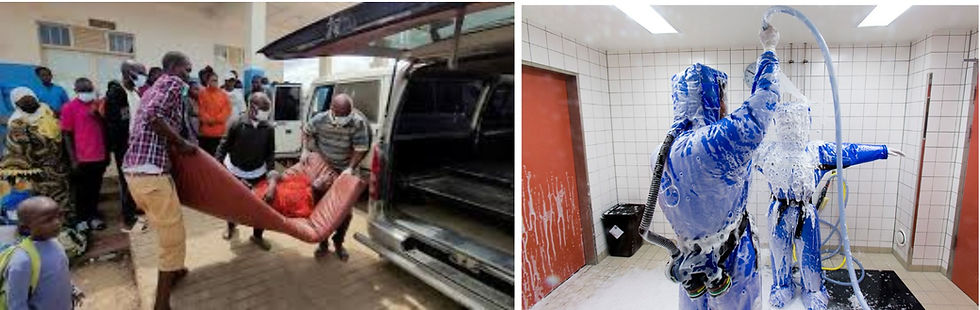
On the left, you can see a photo of African hospital workers transporting an Ebola case inside the building; they aren’t wearing any hazmat suits, gloves, or face shields– only masks– and some people aren’t even wearing that. On the right are two doctors in New York City, after the first Ebola case was reported, getting ready to go and inspect the patient. They are wearing hazmat suits, with oxygen tanks, and are washing the hazmat suits off. Africa, where the disease is quickly spreading, has little to no support and therefore has none of the necessary supplies to prevent any kind of spread.
Hantavirus: An Unsettling Reminder
April 2026 came with strange news from a cruise vessel named MV Hondius - a floating hub hosting guests from two dozen nations when the pathogen started spreading below deck. The pathogen was Andes Hantavirus, which shocked health networks into motion worldwide. Officials in the U.S., tracking down possible exposures, kept tabs on forty-one individuals showing signs or connections. Unlike other strains, this is the only version of Hantavirus that is transmitted directly between people; others jump just from animals to humans through rat feces. Breathing trouble follows infection sometimes, leading straight to hospital beds or worse - but medicine offers nothing precise against it yet, and current vaccines neither remedy nor shield. Still, scientists stress how different this situation feels compared to earlier global surges: catching it demands long stretches near someone infected, not brushing past them at a market stall. Airborne travel isn’t its strength either, which separates it sharply from pathogens such as SARS-CoV-2. A statement issued by CEPI underlined that reality plainly - it likely won’t become what they once called Disease X. Yet here we are reminded again that future dangers may come unannounced, slipping through cracks no one watched.

Diphtheria: A Vaccine-Preventable Disease Resurfaces
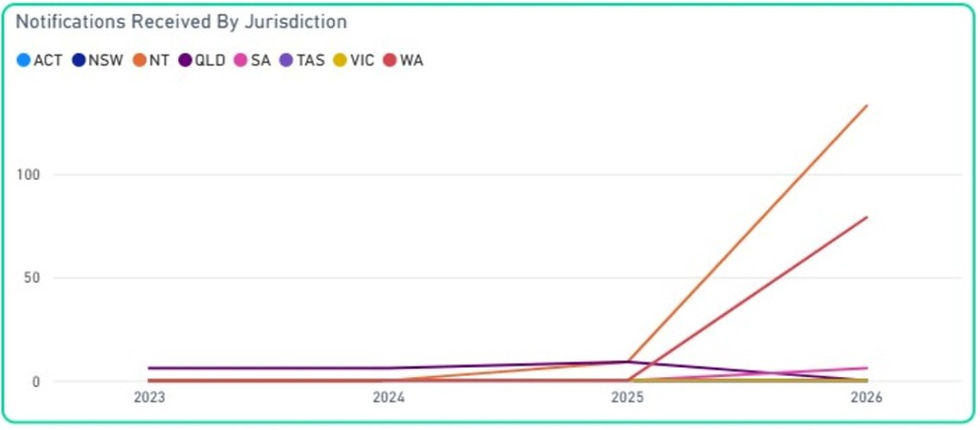
Right now, Australia faces its biggest wave of diphtheria since records started back in 1991. Numbers climbed to between 220 and 226 confirmed infections by the end of May 2026. Most cases appeared in the Northern Territory, adding up to 133 on their count so far. Western Australia saw clusters too, while South Australia counted six, and Queensland reported fewer than five. The first likely fatality tied to diphtheria there in almost ten years was noted in the north. Since New Year’s Day, nearly every case, about 94%, involves Aboriginal or Torres Strait Islander individuals. One out of four patients among them needed hospital care. Most people survive respiratory diphtheria even when treated, though about one in ten do not, says the Australian CDC. Lately, cases have climbed again in the UK, which adds weight to what health officials here now say: those more likely to catch it should get a vaccine top-up every half decade - a step previously aimed mostly at people visiting poorer countries.
After COVID-19, Are We More Ready?
Things have moved faster now. Because of the outbreak, work on vaccines got a big push forward. Monitoring health worldwide has grown stronger, too. A deal under the World Health Organization, agreed upon by every member country in May 2025, set new shared rules. Methods to track genes in viruses, follow who someone contacted, and test illnesses quickly have gotten far sharper. Still, the 2026 report by the Global Preparedness Monitoring Board, called A World on the Edge, shows growing danger instead of progress. Even with better tools and understanding, threats from pandemics are rising sharply. During 2024, almost double the number of health emergencies was recorded compared to 2015, according to the WHO. Because of climate shifts, people are traveling more often, wars are spreading, and weakening confidence in leaders, risks grow quicker than safeguards improve. After emerging from the last pandemic, numerous communities find themselves weaker economically, split further apart, burdened by deeper gaps - all factors that make future outbreaks more likely.
Disease X and the Pathogens to Watch
Right now, the WHO keeps track of dangerous viruses that might spark global outbreaks - like COVID-19, Crimean-Congo fever, Ebola, and others, including MERS-CoV, SARS, Nipah, and Zika. Hidden near the bottom is something called "Disease X," standing in for a mystery pathogen we haven’t seen yet, that could easily evolve and become the next COVID-19. That unknown threat could start the next big outbreak somewhere down the line. While many virus flare-ups stay small, what helps them grow into larger crises is getting stronger.
Conclusion: Yes – But It Doesn’t Have to Be Catastrophic
Yes, another pandemic will likely occur. Right now, threats are building - Ebola returns, new animal-borne viruses emerge, such as Andes hantavirus, while old ones like diphtheria resurface even in places like Australia. Experts at the WHO warn: unless readiness improves dramatically and fairness guides global response, repeated health disasters loom. From COVID-19 came gains - better detection, quicker shots, improved systems. Yet gear and plans by themselves change little. What matters? Choices made ahead of time, steady money behind prevention, leaders who move before sirens start. Outcomes hang on actions taken long before hospitals overflow.
Bibliography:
https://www.worldvision.org/health-news-stories/2014-ebola-virus-outbreak-facts
https://www.cdc.gov/media/releases/2026/transcript-update0515-on-cdcs-hantavirus-response.html
https://cepi.net/what-hantavirus-outbreak-tells-us-about-preparing-disease-x
https://www.aha.org/news/headline/2026-05-15-cdc-says-41-across-us-being-monitored-hantavirus


